Why Sage Green Works Magic in Living Rooms
Sage green isn’t just another color trend. It’s nature’s neutral that somehow manages to be both calming and interesting at the same time.
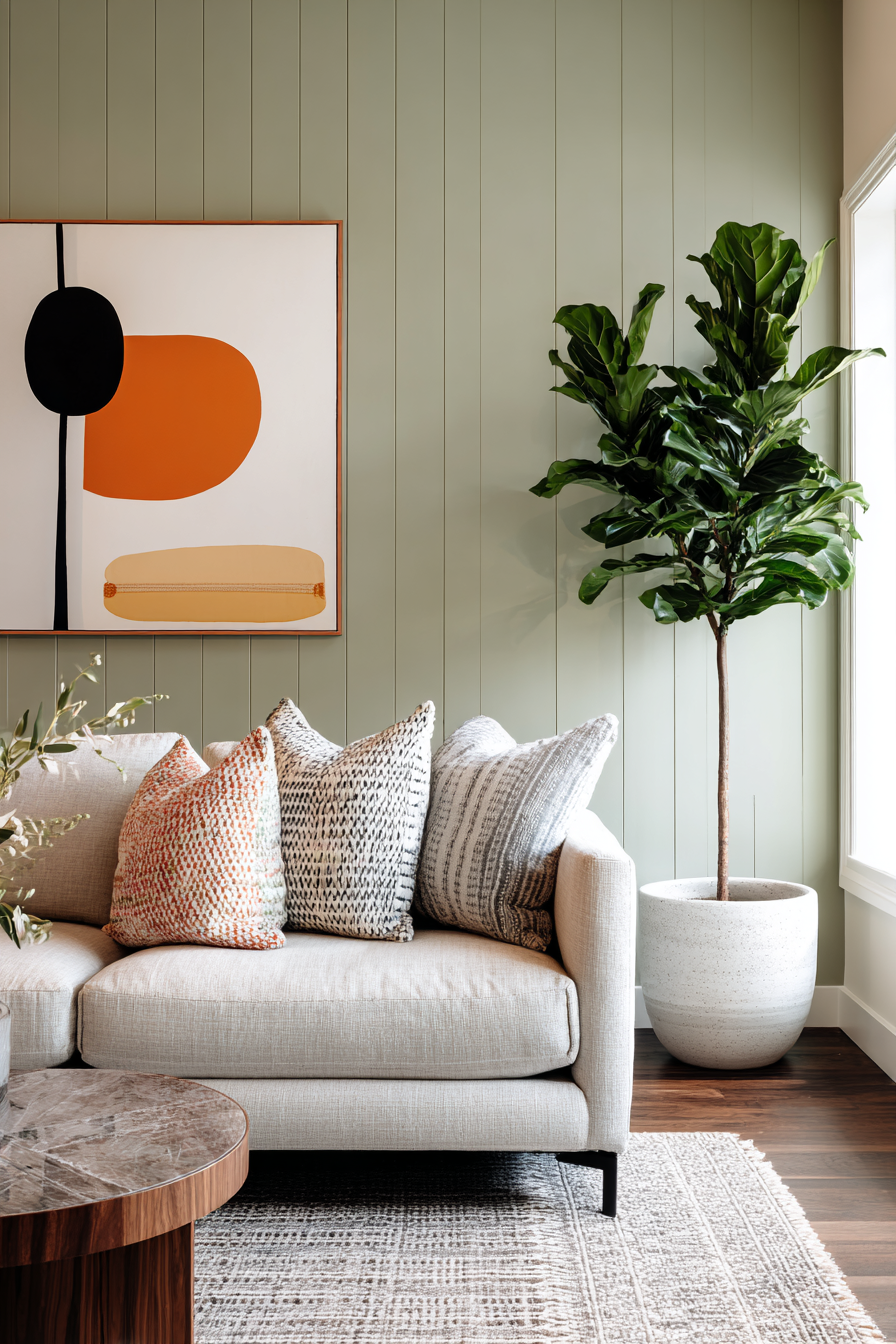
I’ve found that sage green walls create this incredible backdrop that makes everything else in the room look more expensive. Weird but true! The soft, muted tone has enough gray in it to feel sophisticated, but enough warmth to feel welcoming.
When I first painted my walls Sage Advice by Benjamin Moore, my neighbor walked in and said “It feels like I can breathe better in here.” That’s exactly what I was going for!

🖼 Steal This Look
- Paint Color: Sherwin-Williams Clary Sage SW 6178 – this sophisticated sage green has the perfect balance of gray undertones and subtle warmth that creates that expensive, nature-inspired backdrop
- Furniture: cream linen sectional sofa with natural wood coffee table and vintage brass accent pieces
- Lighting: warm brass pendant lights or table lamps with linen shades
- Materials: natural linen, warm brass hardware, reclaimed wood, jute textures
There’s something almost therapeutic about sage green that makes your living room feel like a retreat from the world. It’s that rare color that photographs beautifully but feels even better in person.
✓ Get The Look
Wall Color Magic: The Foundation of Serenity
The biggest impact came from painting my walls. I initially chickened out and just did an accent wall behind my sofa, but two weeks later I went all-in and painted the entire room.
Some tips if you’re considering sage green walls:
- Test your paint samples at different times of day – sage can look dramatically different in morning vs. evening light
- Choose a sage with undertones that complement your flooring (mine has slight blue undertones that work with my oak floors)
- Don’t forget the ceiling! I painted mine a 25% lighter version of my wall color and it made the room feel taller
If you’re renting or scared of commitment, try removable sage green wallpaper instead. My sister did this in her apartment and it looks fabulous.

🏠 Steal This Look
- Paint Color: Benjamin Moore October Mist 1495 for walls with Benjamin Moore White Dove OC-17 for ceiling (25% lighter tint)
- Furniture: natural oak furniture pieces to complement the flooring mentioned
- Lighting: warm LED table lamps to test paint colors at different times of day
- Materials: oak wood flooring with blue undertones, matte paint finish
There’s something magical about that moment when you commit fully to a color – going from one accent wall to the entire room transforms the energy completely.
Creating Balance: The Neutral Dance Partner
Here’s what I learned the hard way: sage green needs neutral friends to really shine.
After my paint job, I immediately noticed how my bright yellow throw pillows suddenly looked cheap and jarring. Not the vibe I wanted!
I switched to cream, taupe, and soft gray accessories and the difference was night and day. The room instantly felt like a fancy hotel suite rather than a chaotic mess.
My favorite neutral companions for sage:
- Cream linen curtains that puddle slightly on the floor
- A chunky oatmeal throw blanket with subtle texture
- White ceramic lamps with natural linen shades
- Warm wood side tables (I thrifted mine for $30!)

🌟 Steal This Look
- Paint Color: Farrow & Ball Vert De Terre No. 234
- Furniture: cream linen sectional with oatmeal textured throw blanket
- Lighting: white ceramic table lamps with natural linen drum shades
- Materials: warm wood accent tables, chunky knit textiles, natural linen
The magic happens when you treat sage green as the star and let neutral accessories play supporting roles. It’s like creating a sophisticated hotel suite where every element feels intentionally curated rather than accidentally collected.
Texture Is Everything (No, Seriously)
Listen, if you take one thing from my experience, let it be this: TEXTURE MATTERS.
Sage green can fall flat if everything is smooth and one-dimensional. I learned to layer different textures to bring the room to life:
- A nubby wool rug in a slightly lighter sage tone
- Velvet throw pillows in deep forest green for contrast
- Woven baskets for storage and visual interest
- Ceramic pots with subtle glaze variations
- Rattan pendant light that casts beautiful shadow patterns
This mix of textures creates depth without needing tons of different colors. It’s like magic for making a monochromatic room feel rich and interesting.

✎ Steal This Look
- Paint Color: Behr Sage Scent S350-3
- Furniture: linen sectional sofa in natural oatmeal with nubby wool throw blanket
- Lighting: rattan pendant light with woven texture for shadow play
- Materials: mix of nubby wool, smooth velvet, natural rattan, glazed ceramics
The magic happens when you can run your hands across a room and feel completely different surfaces that all work in harmony. It’s this textural layering that transforms sage green from boring to breathtaking.
The Accents That Make It Special
Small touches of complementary colors can make sage green sing. I’ve found that limited pops of terracotta, muted blues, and even small touches of brass create this sophisticated palette.
What worked best for me:
- A vintage terracotta vase that I found at a garage sale ($5!)
- Brass picture frames for family photos
- A single navy blue lumbar pillow on my armchair
- Natural wood photo frames with black and white family photos
Just remember – less is more with accent colors. Too many competing colors will kill the calm vibe we’re trying to create here.

🏠 Steal This Look
- Paint Color: Valspar Eucalyptus Leaf 5005-2C for the main sage green walls with Valspar Soft Woolen Fleece 1000-2C for trim to let the sage green be the star
- Furniture: natural wood accent furniture pieces like a reclaimed teak side table or white oak console to complement the brass and terracotta accents
- Lighting: brass table lamps or brass floor lamp with linen shade to tie into the warm metal accent theme
- Materials: mix of natural textures – jute rug, linen upholstery, ceramic terracotta vessels, and warm brass hardware
The beauty of sage green lies in its ability to make even budget finds like that $5 garage sale vase look intentionally curated and expensive. This color palette whispers elegance rather than shouting for attention.
Plants: The No-Brainer Addition
I mean, obviously plants and sage green are a match made in heaven. But there’s an art to doing it right.
In my living room, I’ve mixed:
- One statement floor plant (a fiddle leaf that somehow hasn’t died yet)
- Small potted herbs on my windowsill (rosemary and thyme that smell amazing)
- A hanging pothos that adds movement
- One good quality faux plant for the dark corner where nothing would survive
The different heights and textures create this lush feeling without turning your living room into an actual jungle.

🏠 Steal This Look
- Paint Color: PPG Herb Garden S350-4 – a soft sage green that complements natural plant foliage without competing
- Furniture: natural wood console table or plant stand in warm oak finish to ground the botanical elements
- Lighting: adjustable brass pharmacy floor lamp for targeted plant light and ambient warmth
- Materials: woven jute textures, ceramic planters in cream and terracotta, natural fiber rugs
The beauty of sage green living rooms lies in how effortlessly they embrace nature’s palette. When you add plants to sage walls, you’re essentially bringing the garden indoors in the most sophisticated way.
Rustic Touches That Feel Like Home
My sage green living room really came together when I added some rustic elements. These pieces ground the space and keep it from feeling too precious or perfect.
My favorite rustic elements:
- An old wooden coffee table with visible knots and imperfections
- A vintage mirror with slightly tarnished edges
- Open shelving made from reclaimed wood
- A stone vase that’s slightly asymmetrical
These natural, imperfect elements play perfectly with sage green’s earthy quality. They make the space feel collected over time rather than ordered from a catalog.
🏠 Steal This Look
- Paint Color: Dunn-Edwards Sage Creek DE5655
- Furniture: reclaimed wood coffee table with natural imperfections, open shelving with raw wood finish, vintage leather armchair with worn patina
- Lighting: wrought iron chandelier with Edison bulbs or rustic pendant lights with metal cage details
- Materials: reclaimed barn wood, natural stone, aged metals, distressed leather, linen textiles
There’s something deeply satisfying about a living room that feels like it has stories to tell. When rustic elements are paired thoughtfully with sage green walls, the space becomes a sanctuary that welcomes you home.
Lighting That Sets The Mood
Can we talk about lighting for a sec? It can make or break a sage green room.
I learned that sage looks amazing in natural daylight but can go a bit muddy in poor artificial light. My solutions:
- Removed heavy curtains and just use sheer panels for privacy
- Added a warm-toned floor lamp in the dark corner
- Installed dimmer switches on all overhead lights
- Used candles strategically for evening ambiance
The golden glow of warm lighting against sage green walls creates this cozy atmosphere that makes everyone want to linger longer.
The Final Touches That Make It Home
After nailing the big stuff, it’s the little personal touches that make a sage green living room feel like YOURS.
For me, that included:
- A gallery wall of family photos in matching frames
- A bowl of pinecones I collected on walks
- Books stacked horizontally as mini display platforms
- A handmade throw blanket from my grandmother
These personal elements tell your story and keep the room from feeling like a staged magazine photo.
My Top Lessons Learned
After living with my sage green living room for over a year now, here’s what I wish